

7 Fall Home Projects to Finish Before Winter in Sanders County
Planning fall home improvements in Sanders County? Explore concrete, fencing, exterior repairs, drainage, remodeling, and other projects to consider before winter
Fall in Western Montana has a habit of moving faster than expected. One week there is plenty of daylight for outdoor projects, and before long colder nights, shorter days, and winter weather begin changing what can realistically be completed outside.
For homeowners in Thompson Falls and throughout Sanders County, early fall is a good time to look around the property and decide what should be addressed now, what can be handled indoors during winter, and what should be planned ahead for spring.
Not every project has to be large. Sometimes repairing an exterior problem before winter prevents a bigger issue later. Other times, fall is the right opportunity to finally move forward with a driveway, fence, remodel, or property improvement that has been sitting on the list all summer.
Here are seven projects worth considering before winter arrives.
1. Concrete Driveways, Patios, Walkways, and Pads
If a new driveway, patio, walkway, equipment pad, or other concrete project is already on your list, early fall is the time to start the conversation.
A good concrete project involves much more than simply pouring material into a form. Site preparation, the base underneath the concrete, reinforcement, drainage, placement, finishing, and control joints can all affect how the finished surface performs.
Conditions also matter more as the season gets colder.
That does not automatically mean a concrete project is too late once September arrives. It means the property, project size, weather, and schedule should be evaluated before making that decision.
Partridge Property Maintenance handles residential concrete projects including:
Driveways
Patios
Walkways
Concrete pads
Residential flatwork
Formwork and reinforcement
Concrete placement and finishing
If conditions or timing make a fall project impractical, planning it now can also put you in a much better position for spring 2027.
2. Fence and Gate Projects
A fence does more than define a property line.
For many homeowners, fencing provides privacy, security, pet containment, wind protection, or simply a more finished outdoor space.
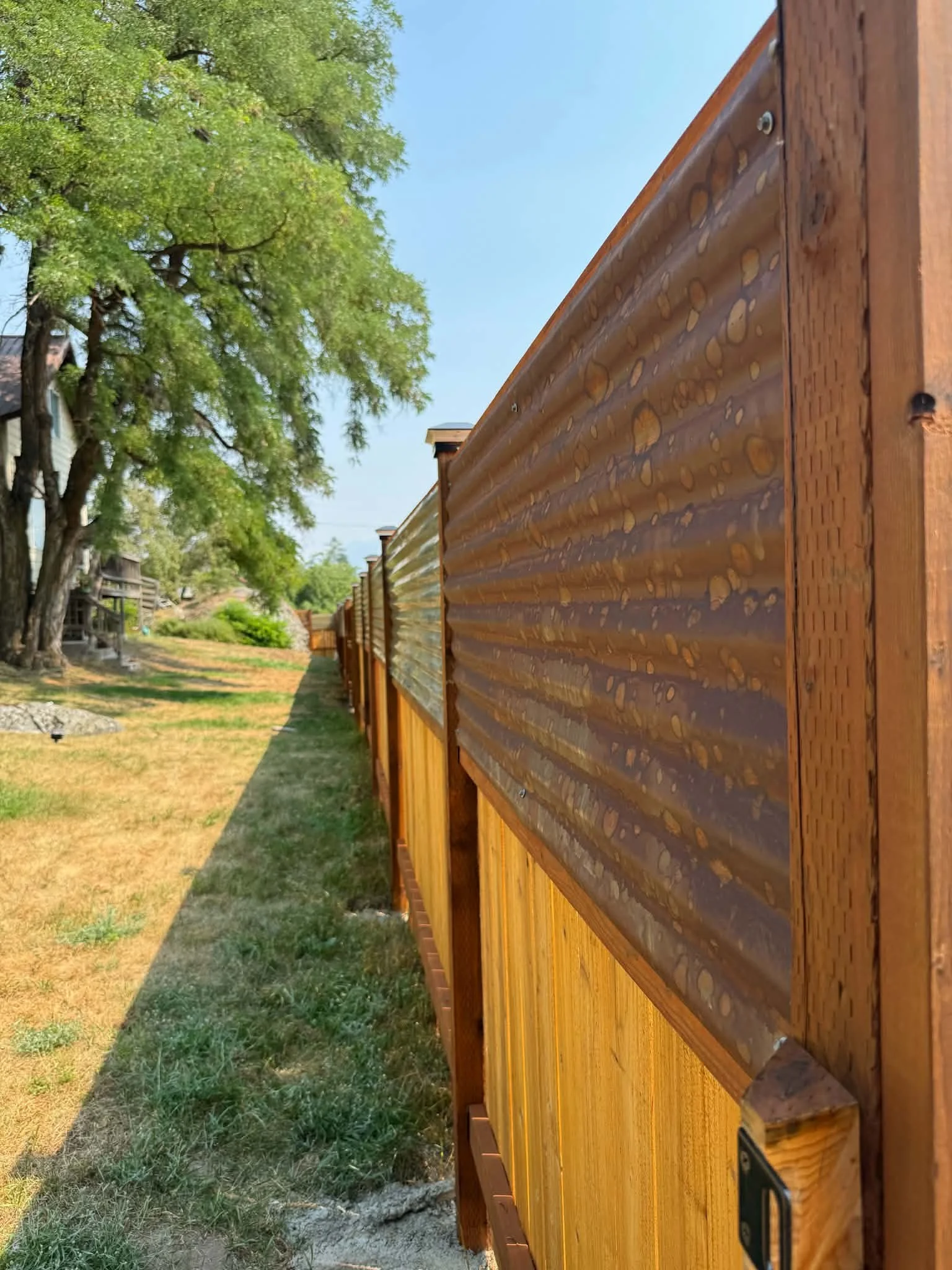
Fall can be a good opportunity to replace damaged sections, install a new privacy fence, improve an existing gate, or finish a project that has been put off during the summer.
Partridge works with cedar privacy fencing, mixed-material designs, custom gates, staining, and other residential fence projects.
This is also the time to inspect existing fencing for loose posts, damaged boards, sagging gates, or other problems that could become more frustrating after snow and frozen ground arrive.
3. Exterior Repairs Before Winter
Small exterior problems have a way of becoming much more noticeable during a Western Montana winter.
Walk around the property and look closely at:
Damaged or deteriorating trim
Loose exterior materials
Areas needing paint or stain
Deck and porch damage
Roofline or soffit concerns
Weather-exposed wood
Exterior areas that have been on the repair list all summer
The goal is not to renovate an entire house simply because September arrived.
It is to identify problems that make more sense to address before months of snow, moisture, freezing temperatures, and winter weather.
Planning a fall project in Sanders County?
Partridge Property Maintenance provides free, no-obligation estimates for construction, concrete, fencing, remodeling, exterior work, and custom property improvements.
If you have something you would like completed before winter, discussing it early gives Bob a chance to look at the property, project scope, and current scheduling before making promises about timing.
4. Drainage, Trenching, and Site Improvements
Some of the least glamorous projects around a property can be some of the most useful.
If water regularly ends up somewhere it should not, fall gives you another opportunity to identify the problem before snowmelt and spring moisture return.
Depending on the property, that might involve drainage improvements, trenching, site preparation, irrigation work, cleanup, or changes to how water moves through an outdoor area.
These projects are particularly worth thinking about now if you already know that certain parts of the property become troublesome during wet weather.
Even when the work itself is better completed later, understanding the problem before spring can make planning much easier.
5. Decks, Porches, and Outdoor Living Areas
After using your outdoor space all summer, you probably know exactly what you wish were different.
Maybe the deck needs repairs.
Maybe the porch needs attention.
Maybe there is an awkward section of the property that could become a much more useful outdoor living area.
Or perhaps the project is larger and belongs on the 2027 construction calendar.
Fall is useful because the weaknesses of an outdoor space are still fresh in your mind. Instead of forgetting about them all winter and starting the planning process in May, you can begin determining the scope now.
For larger projects, early planning can also give you time to think about layout, materials, budget, and scheduling before construction season becomes busy.
6. Start Planning a Home Addition or Larger 2027 Project
Some projects should not begin with a shovel.
They should begin with a conversation.
If you are considering a home addition, major remodel, new home, or substantial property improvement in 2027, fall is not too early to start working through the idea.
Larger construction projects often involve decisions about:
What you actually want the new space to accomplish
Existing property conditions
Approximate project scope
Materials and finishes
Specialty trades
Scheduling
Budget expectations
Site access and preparation
Working through those questions months before you want construction to begin gives you more room to make good decisions instead of trying to figure everything out once spring arrives.
For homeowners throughout Sanders County and Western Montana, fall and winter can be valuable planning seasons even when the physical work will not begin until later.
7. Move the Project Indoors
Winter does not have to mean home improvement stops completely.
Once outdoor conditions become less cooperative, projects can shift toward the inside of the house.
That can include:
Kitchen remodeling
Bathroom remodeling
Interior trim and finish work
Painting
Flooring and interior improvements
Repairs
Preparing interior spaces for a larger renovation
If you already know you want to improve part of your home this winter, bringing Bob into the conversation during fall can help determine the scope and whether the project is a good fit before winter scheduling fills.
That is especially useful for homeowners who have spent the summer saying:
“We'll get to that this winter.”
Winter has a funny way of showing up whether the project plan does or not.
Fall Is Also the Time to Think About Spring
The biggest mistake is assuming every spring project needs to be planned in spring.
If you are thinking about concrete, fencing, decks, additions, outdoor improvements, site work, or new construction in 2027, there is nothing wrong with starting the conversation months ahead.
You do not need every detail figured out.
A project can begin with something as simple as:
This is what I want to change. This is where the property is. What should I be thinking about?
That gives everyone more time to evaluate the project and determine sensible next steps.
Have a Project in Mind?
Partridge Property Maintenance is an owner-led general contractor serving Thompson Falls, Sanders County, and surrounding Western Montana communities, with select regional projects also considered throughout Western Montana and North Idaho.
Bob works directly with property owners on construction, remodeling, concrete, fencing, exterior projects, sprinklers, site work, and custom residential property improvements.
Whether you are hoping to complete something this fall, start an indoor project this winter, or get ahead of a spring 2027 project, you can start by telling us what you have in mind.
Free, no-obligation estimates are available.
Request a Free Estimate →
Call or text: (208) 916-7716

5 Signs Your Home Needs Work Done Before Winter Hits (Western Montana & North Idaho)
Living in Western Montana or North Idaho means winter isn't gentle. Here are five signs it's time to call a contractor before the snow flies — and why late summer is the best time to act.

If you live anywhere between Missoula and Coeur d'Alene, you already know winter here doesn't ease in gently. One week it's still warm enough to finish a deck project, and a few weeks later you're shoveling the driveway before sunrise. That narrow window between the two is exactly why late summer and early fall are the busiest — and smartest — time of year to get exterior work done.
Every year, we hear the same story from homeowners: a small issue got noticed in spring, life got busy over summer, and by the time first snow hit, a simple fix had turned into a much bigger, much colder problem. The good news is that most of these issues give you plenty of warning if you know what to look for.
Here are five signs your home is telling you it's time to call — before the weather makes the decision for you.
1. Your roof has visible wear from last winter
Heavy snow load, ice dams, and repeated freeze-thaw cycles are some of the hardest conditions a roof faces all year. If you noticed missing or curling shingles, sagging spots, granule buildup in your gutters, or water stains creeping across a ceiling last spring, that damage doesn't heal itself over summer. It sits there, quietly getting worse, until the next heavy snowfall finds the weak point.
What to look for: missing or cracked shingles, dark streaks or stains on interior ceilings, daylight visible through the attic, or gutters full of granules that have worn off the shingles above.
Why now matters: roofing work needs dry, stable weather to do properly. Once the first real storms roll through, a full inspection or repair becomes both harder to schedule and harder to execute safely. A roof assessment in late summer, while conditions are predictable, is a far easier and often cheaper path than an emergency repair in the middle of a February storm.
2. Paint or siding is cracking, peeling, or fading
Exterior paint and siding aren't only about how a house looks from the street — they're the first line of defense between your home and the moisture that a Montana or North Idaho winter throws at it. Once paint starts cracking or siding starts warping and pulling away, water finds a way behind it. That moisture then sits and freezes, expanding cracks wider each cycle until a cosmetic issue becomes a structural one.
What to look for: peeling or bubbling paint, visible gaps between siding panels, soft or discolored wood trim, and any spot where you can see bare wood exposed to the elements.
Why now matters: exterior paint and stain need a real window of dry, moderate temperatures to cure and bond properly. That window is closing fast this time of year, which makes late summer genuinely the last practical opportunity before conditions work against the paint job itself, not just your schedule.
3. Windows and doors are letting in drafts
If you can feel air moving around a window frame or door threshold on a calm day, that's not just a comfort issue — it's a heating bill issue that repeats every single day of winter. Old caulking shrinks, weatherstripping compresses over the years, and frames can shift slightly as a house settles, all of which open tiny gaps that add up to real heat loss.
What to look for: a visible gap you can see daylight through, a noticeable temperature difference near a window compared to the rest of the room, or a door that used to seal tightly but now rattles or lets in a draft.
Why now matters: sealing, weatherstripping, and window or door replacement are all far easier and faster to schedule while temperatures are still workable outside for the crew doing the work. Waiting until the cold sets in often means living with the draft for another full season before it's practical to fix.
4. Your deck or exterior structure feels soft, loose, or uneven
A wet spring can leave wood decks, stairs, and railings holding more moisture than they should. Left alone, that moisture leads to soft spots, warping, and loosened fasteners — issues that are a straightforward repair in summer but become a real safety concern once snow and ice sit on top of a structure that's already compromised.
What to look for: boards that flex or feel spongy underfoot, railings with any wobble, and fasteners that have started to back out or rust through.
Why now matters: catching this while it's still a repair, rather than a full rebuild, saves both money and risk. A deck that's fine to patch in August can become a genuine hazard once it's buried under snow and ice for months.
5. You've been putting off "the big project" all year
New additions, kitchen remodels, and full renovations all take real planning — permitting, material lead times, and scheduling all take longer than most people expect. Contractors also tend to book up fast heading into fall, as everyone tries to get projects finished before the ground freezes and outdoor work becomes impossible.
What to look for: if you've caught yourself saying "maybe next year" more than once about the same project, that's usually a sign it's worth at least getting a real conversation started now.
Why now matters: the earlier a project gets scoped and scheduled, the more likely it is to actually get finished before winter — rather than getting pushed, again, into next year.
The bottom line
None of this is about creating urgency where there isn't any. It's simply that Western Montana and North Idaho give homeowners a real, limited window each year to get exterior work done properly — and once that window closes, most of these same repairs get harder, slower, and more expensive to complete.
If any of the five signs above sound familiar, it's worth getting a second opinion while there's still time to act on it, rather than finding out the hard way once winter arrives.
Serving Missoula, Rathdrum, Post Falls, Coeur d'Alene, and the Silver Valley corridor.
Get a free estimate → | Call or text (208) 916-7716